June 22, 2026
Back to Case Studies 
Inventory Management & Automation for a Manufacturing Company
A 50–100 employee manufacturing company was relying on manual inventory tracking, spreadsheets, and repetitive team follow-ups. AscentiQ AI built a centralised inventory management system with automated stock tracking, low-stock alerts, replenishment workflows, and real-time dashboards—helping reduce manual inventory work by ~60% and save 30+ hours every month.
Industry: Manufacturing
Company Size: 50–100 Employees
Solution: Inventory Management + Workflow Automation
Client: Manufacturing Company
The Challenge
The client was managing inventory through a combination of spreadsheets, manual updates, and communication between inventory, purchase, and production teams.
As operations grew, this created several challenges:
- Limited visibility into current inventory levels
- Time-consuming manual stock updates
- Delays in identifying low-stock materials
- Repetitive follow-ups between teams
- Manual inventory reconciliation and reporting
- Difficulty getting a consolidated view of inventory
The client needed more than just inventory software.
They needed a system that could track inventory, identify exceptions, and automatically trigger the right actions.
The Solution
AscentiQ AI designed and implemented a centralised Inventory Management & Automation System around the client’s existing manufacturing workflow.
Rather than replacing the entire operational setup, we connected inventory management with automated workflows to reduce repetitive manual work.
What We Built
- Centralised Inventory Management
A structured system to manage stock levels, material movement, incoming and outgoing inventory, and replenishment requirements.
- Automated Stock Tracking
Inventory updates were integrated into the workflow, reducing dependency on repetitive manual data entry.
- Low-Stock Detection
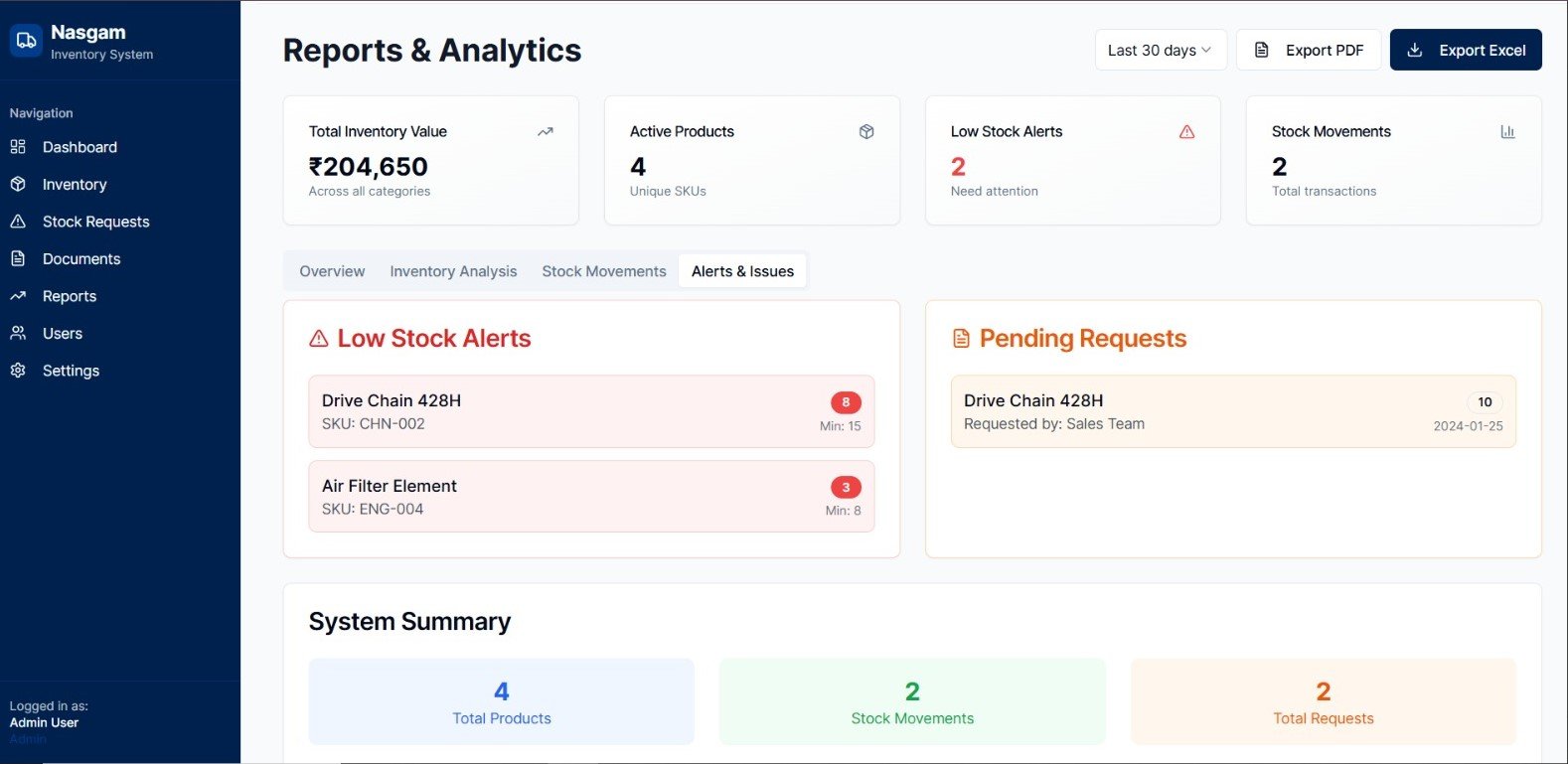
The system continuously monitored inventory against predefined thresholds and automatically flagged materials requiring attention.
- Purchase & Replenishment Automation
When inventory reached defined levels, the workflow triggered the relevant notification and initiated the next operational step.
- Automated Notifications
Relevant teams received automated alerts for low stock, material receipt, replenishment requirements, and other inventory events.
- Management Dashboard
A centralised dashboard provided management with visibility into inventory status, movement, and critical requirements.
How the Automation Works
Inventory Transaction
↓
Stock Automatically Updated
↓
Inventory Level Checked
↓
Threshold Detected
↓
Automation Triggered
↓
Team Notified
↓
Purchase / Operational Action
↓
Inventory Updated
The result was a shift from manually monitoring inventory to a workflow where the system could continuously monitor and trigger actions.
Results & Business Impact
| Metric | Impact |
|---|---|
| Manual Inventory Work | ~60% Reduction |
| Inventory Reconciliation Time | ~40% Faster |
| Low-Stock Identification | ~70% Faster |
| Manual Team Follow-ups | ~50% Reduction |
| Manual Work Saved | 30+ Hours / Month |
| Inventory Visibility | Centralized |
| Stock Monitoring | Proactive & Automated |
| Management Reporting | Centralized Dashboard |
Before vs. After
| Before | After |
| Spreadsheet-dependent inventory tracking | Centralised inventory management |
| Manual stock monitoring | Automated stock monitoring |
| Manual low-stock checks | Automated threshold alerts |
| Repeated team follow-ups | Automated notifications |
| Manual inventory reporting | Centralized dashboard |
| Reactive replenishment | Proactive replenishment workflow |
| Fragmented information | Single source of truth |
The Business Impact
The transformation wasn’t simply about digitising inventory records. It was about automating what happens around the inventory data.
The system now helps the client monitor stock, identify critical inventory conditions, notify the right teams, and initiate the next operational step with significantly less manual intervention. This gives the business a more scalable, responsive, and transparent inventory operation as it continues to grow.
Built for the Way the Business Works
At AscentiQ AI, we don’t believe manufacturers should have to completely replace their existing systems to adopt automation. We first understand how the business operates, identify where manual work is slowing the team down, and then build technology around the existing workflow.
Understand → Design → Automate → Integrate → Scale
Build Smarter Manufacturing Operations with AscentiQ AI
From inventory and procurement to production and customer operations, we help manufacturers turn repetitive processes into intelligent, automated workflows.